
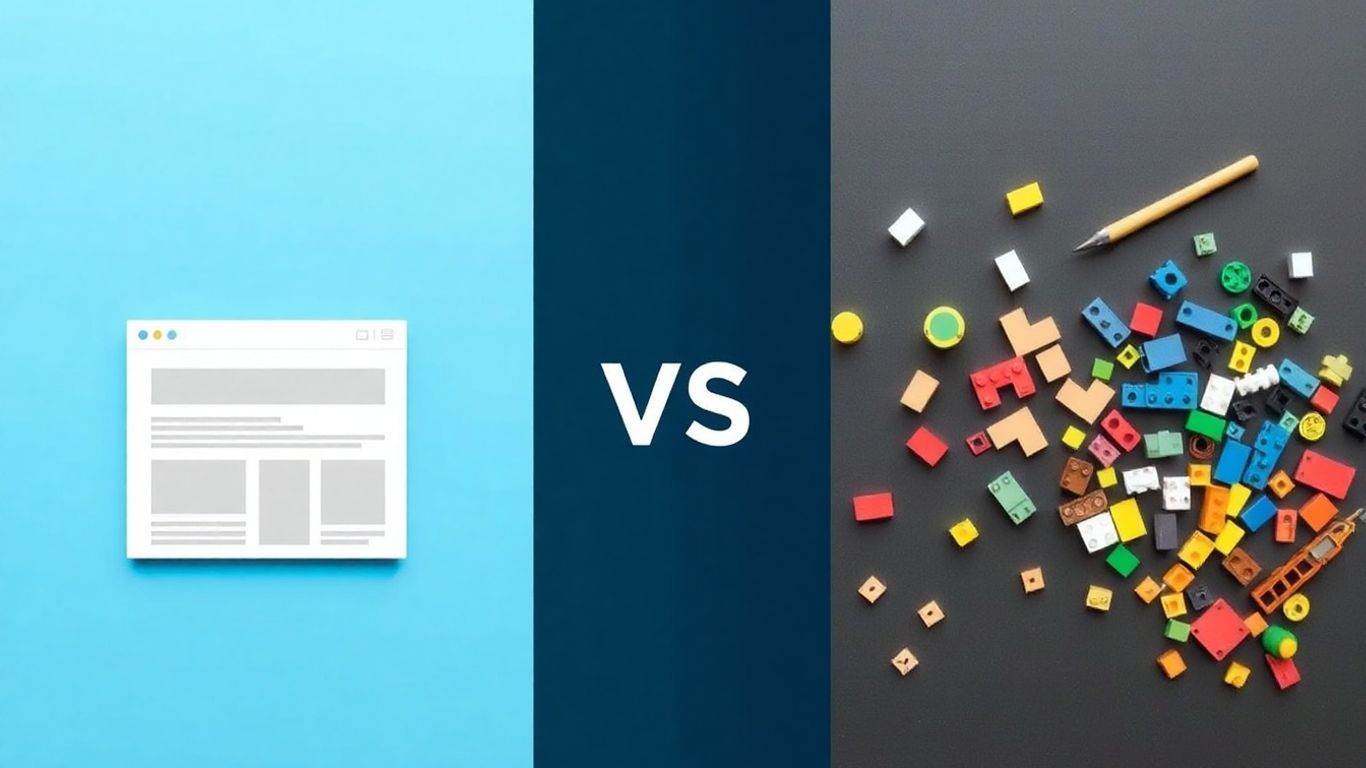
So, you need a pre-built Local Lead Generation Website, huh? Big decision time: do you build it yourself from scratch, or grab one of those ready-made templates? It’s kind of like deciding whether to build a custom house or buy a prefab one. Both get you a roof over your head, but they feel pretty different. We’re going to break down what goes into each option so you can figure out which path makes the most sense for your business and your wallet.
Understanding Your Local Lead Generation Website Options
So, you’re looking to get a website for your local business, specifically for generating leads. That’s a smart move! But before you jump in, you’ve got a couple of main paths you can take. It’s not just about picking a color scheme; it’s about how the whole thing gets built and what that means for your business down the road.
The Core Difference Between Custom and Templated Websites
Think of it like building a house. You can either buy a pre-fab home that’s already designed and just needs a few personal touches, or you can hire an architect and builder to construct something completely from the ground up, exactly to your specifications. That’s pretty much the difference here. A templated website uses a pre-existing design and structure. You pick a theme, maybe tweak some colors and fonts, and plug in your content. It’s fast and usually cheaper. A custom website, on the other hand, is built specifically for you. Designers and developers start with a blank slate, creating everything from the layout to the functionality based on what you need. This gives you total control but takes more time and money. For many small businesses, a website builder can be a good starting point, offering a quick way to get online for around $4 to $159 per month.
Key Components of Any Website Build
No matter which route you choose, certain things are non-negotiable for a lead-gen website. You’ll need:
- Clear Calls to Action (CTAs): What do you want visitors to do? Call you? Fill out a form? Download a guide? Make it super obvious.
- Contact Information: Easy to find phone numbers, email addresses, and physical location (if applicable).
- Service/Product Pages: Detailed descriptions of what you offer, highlighting benefits for the customer.
- Mobile Responsiveness: Your site must look good and work well on phones and tablets, because most people browse that way.
- Basic SEO Setup: Even a template needs some attention to keywords and site structure so search engines can find you.
Defining Your Website’s Purpose
Before you even think about templates or custom builds, ask yourself: what is this website for? Is it just an online brochure, or is it meant to actively bring in new clients? For lead generation, the purpose is usually quite specific: to attract potential customers, give them a reason to trust you, and make it easy for them to reach out. Understanding this core purpose will guide all your other decisions. For example, if your main goal is to get people to request a quote, your website needs a prominent quote request form and maybe some testimonials to build credibility. It’s about making sure the website actually does the job you need it to do.
Building a website isn’t just about making it look pretty. It’s about creating a tool that works for your business, attracting the right people, and turning them into paying customers. Think about the end goal from the very beginning.
The Advantages of a Custom-Built Local Lead Generation Website
When you’re looking to really make your mark online, especially with a local lead generation website, going the custom route can offer some serious perks. It’s not just about looking different; it’s about building something that works exactly how you need it to.
Showcasing Your Unique Brand Identity
Think about it: your business has its own personality, right? A custom website lets you translate that directly into your online presence. You’re not stuck trying to fit your brand into a pre-made box. Instead, you get to work with designers to pick out every color, font, and image, making sure it all screams your brand. This makes a strong first impression and helps people remember you. It’s about building trust and looking professional from the get-go.
Crafting an Optimized User Experience
This is where custom really shines. You can design the entire journey for someone visiting your site. Need a super simple way for people to request a quote? Or maybe a complex form to gather specific client needs? A custom build allows you to create exactly that. It means visitors can find what they need quickly and easily, which is a big deal for getting them to take action. A well-designed user experience keeps people engaged and more likely to become a lead. You can tailor everything to your specific audience, making their interaction with your business smooth and effective.
Maximizing Search Engine Optimization Potential
While templates can be okay for SEO, a custom site gives you a lot more control. Developers can build the site structure from the ground up with search engines in mind. This means things like site speed, mobile-friendliness, and how the content is organized can all be fine-tuned for better search rankings. You can implement specific strategies without being held back by template limitations. This can lead to more organic traffic, which is often the most consistent source of leads for a local business website.
Here’s a quick look at how custom stacks up:
- Unique Design: Stands out from competitors.
- Full Control: Tailor every aspect to your needs.
- Optimized Performance: Built for speed and search engines.
- Scalability: Grows with your business.
Building a custom website means you’re not just getting a digital storefront; you’re creating a powerful tool designed specifically to attract and convert your ideal customers. It’s an investment in how your business presents itself and functions online.
The Drawbacks of a Custom-Built Local Lead Generation Website
While building a website from the ground up offers a lot of control, it’s not all sunshine and rainbows. There are some pretty significant downsides to consider before you jump into a custom build.
Significant Upfront Investment Required
Let’s get straight to it: custom websites cost more. A lot more, usually. You’re paying for skilled designers and developers to craft something unique, and that expertise doesn’t come cheap. If your budget is tight, this is probably the biggest hurdle. We’re talking potentially tens of thousands of dollars, depending on how fancy you want to get with features and integrations. It’s not just about the look; it’s about the custom code, the backend work, and all the behind-the-scenes stuff that makes it tick.
The more complex the functionality, the higher the price tag.
Extended Development Timeline
Forget launching next week. Building a custom website is a marathon, not a sprint. Because everything is made from scratch, the process can drag on for weeks, or even months. This means you’ll be waiting longer to start generating leads online. If you need a website now, a custom build might just make you pull your hair out.
Here’s a rough idea of what you might be looking at:
- Discovery & Planning: 1-3 weeks
- Design Phase: 2-6 weeks
- Development & Coding: 4-12 weeks (or more!)
- Testing & Revisions: 1-4 weeks
Need for Ongoing Technical Expertise
Once your custom site is live, it doesn’t just run itself. You’ll likely need someone with technical know-how to maintain it, update it, and troubleshoot any issues that pop up. This could mean hiring an in-house person or continuing to pay an agency. While templates often have simpler maintenance, custom sites can require more specialized attention, especially as you add new features or integrations down the line. It’s an ongoing commitment, not a one-and-done deal.
Custom websites, while offering ultimate flexibility, demand a greater investment in both time and money. You’re essentially paying for a bespoke solution, which naturally comes with a higher cost and a longer wait time. Plus, keeping that custom solution running smoothly often requires ongoing technical support, adding to the long-term expense.
Exploring Pre-Built Templates for Your Local Lead Generation Website

So, you’re looking at getting a website up and running for your local lead generation business, and you’ve stumbled upon pre-built templates. These are basically ready-made website designs that you can buy and adapt for your own use. Think of it like buying a house plan versus hiring an architect to design a custom home from scratch.
Pre-built templates offer a fast track to getting online, often at a much lower cost than a fully custom build. we are designed to be user-friendly, meaning you don’t necessarily need to be a tech wizard to get things set up. Many platforms provide drag-and-drop interfaces that make customization pretty straightforward.
Affordability and Quick Deployment
This is probably the biggest draw for many businesses, especially startups or those with a tight budget. You can get a professional-looking website live in a fraction of the time it would take to build one from the ground up. Instead of weeks or months, you might be looking at days, or even hours, to get your basic site operational. This speed means you can start generating leads sooner.
Ease of Use for Non-Technical Users
If coding makes your head spin, templates are a lifesaver. Most template providers focus on making their platforms accessible. You can usually tweak colors, fonts, and images without needing to touch a single line of code. This makes it possible for business owners to manage their own website without constantly relying on a developer for every little change. It’s a big plus for keeping operational costs down.
Limitations in Uniqueness and Customization
Here’s where things can get a bit tricky. Because these templates are pre-built, we are used by many other people. This means your website might end up looking very similar to a competitor’s, which isn’t ideal when you want your business to stand out. While you can change colors and add your logo, the underlying structure and layout are often fixed. This can make it hard to truly reflect your unique brand identity or implement specific functionalities that would really help capture leads, like custom forms. You might find yourself wishing you could do more, but the template just doesn’t allow it. For example, if you need specific lead capture forms, you might want to explore lead generation form examples to see what’s possible, but implementing them on a restrictive template can be a challenge.
Potential Pitfalls of Pre-Built Local Lead Generation Website Templates
While pre-built templates seem like a quick fix, they come with their own set of problems that can really hold your business back. It’s not all sunshine and rainbows, and you need to know what you’re getting into.
Challenges with Brand Representation
One of the biggest headaches with templates is making your business look unique. Since these templates are used by tons of other people, your site might end up looking a lot like your competitor’s. This lack of originality can make it tough to stand out and build a strong brand identity. You can change colors and fonts, sure, but the core structure and layout are usually fixed. This means you might not be able to truly capture what makes your business special. It’s like trying to fit a square peg into a round hole – it just doesn’t quite work.
Difficulties in Scaling and Future Growth
Think about your business five years from now. Will a template be able to keep up? Probably not. Templates are often built with a one-size-fits-all approach. When your business grows and needs new features, like integrating with other software or adding complex booking systems, you might find yourself hitting a wall. Modifying a template to handle advanced functionality can be a real struggle, and sometimes it’s just not possible without a complete rebuild. This can lead to a situation where you have to switch to a custom site anyway, which costs more time and money down the line. It’s often better to plan for growth from the start, even if it means a bit more work upfront. You can explore options for website builders that offer more flexibility as you expand.
Performance and SEO Constraints
Templates can sometimes be bloated with code and features you don’t even need. This extra stuff can slow down your website, which is bad for user experience. People don’t like waiting for pages to load, and they’ll just leave. Search engines like Google also notice slow sites, and it can hurt your rankings. While you can do some basic SEO on a template site, optimizing it to its full potential can be tricky. Custom-built sites, on the other hand, are built lean and mean, with only the code you need, which usually means better performance and a stronger foundation for SEO. It’s a trade-off between initial cost and long-term effectiveness.
It’s easy to get lured in by the low cost and quick setup of pre-built templates. However, overlooking the potential limitations in branding, scalability, and performance can lead to significant problems later on. What seems like a bargain now could end up costing you more in the long run if your website can’t adapt to your business’s evolving needs or effectively compete online.
Key Factors for Choosing Your Local Lead Generation Website Approach
So, you’ve looked at the options – building from scratch or grabbing a pre-made template. Now comes the part where you actually decide which path makes the most sense for your business. It’s not just about picking the prettiest design; it’s about matching your website strategy to your overall goals. Let’s break down what you really need to think about.
Aligning Your Budget with Your Goals
This is probably the first thing most people consider, and for good reason. How much money can you realistically put into this project? A custom build will always cost more upfront. We’re talking design, development, custom features – it all adds up. On the flip side, templates are way cheaper to start with. You might pay a monthly fee or a one-time cost, but it’s usually a fraction of a custom build. But here’s the thing: a cheap template that doesn’t bring in leads is just a waste of money, right? So, think about what you need the website to do and then see which option fits your wallet without sacrificing those core functions.
| Website Type | Typical Upfront Cost | Ongoing Costs | Best For |
|---|---|---|---|
| Pre-built Template | $ | $$ | Small budgets, quick launch |
| Custom Build | $$$$ | $ | Specific needs, long-term growth |
Assessing Your Time Constraints
How quickly do you need this website up and running? If you’re eager to start generating leads yesterday, a pre-built template is your friend. You can often get one live in a matter of days, maybe even hours, depending on how much customization you do. Building from scratch takes time. You’ve got planning, design, development, testing – it can easily stretch into weeks or even months. If you have a tight deadline or just want to get started fast, that’s a big point in favor of templates. But if you can afford to wait a bit for something truly tailored, a custom build might be worth the patience.
Prioritizing Brand Consistency and Uniqueness
Does your business have a really specific look and feel? Is it super important that your website screams your brand and not just another generic business? Custom websites are built from the ground up to match your brand identity perfectly. You get exactly the colors, fonts, layout, and overall vibe you want. Pre-built templates, while often customizable to a degree, can sometimes feel a bit… well, templated. You might struggle to make it look truly unique or perfectly align with your brand’s specific personality. If standing out and having a memorable, distinct online presence is a big deal for you, this is where custom really shines.
Planning for Future Scalability and Growth
Think about where your business is headed. Do you plan to add new services, expand into new markets, or integrate with other software down the line? Custom websites are generally built with future growth in mind. It’s usually easier to add new features, pages, or functionalities as your business evolves. Templates can sometimes hit a wall. You might find that a template you chose today just can’t handle the new features you need in a year or two, forcing you to rebuild anyway. If you see significant growth on the horizon, investing in a custom build now could save you headaches and money later.
Choosing the right website approach isn’t a one-size-fits-all decision. It’s about honestly evaluating your business’s current situation and future aspirations. Don’t just pick the cheapest or fastest option without considering how it aligns with your long-term vision and operational needs. Sometimes, a little extra investment upfront pays off big time down the road.
So, What’s the Verdict?
Alright, so we’ve looked at the whole picture. Building a pre-built local lead generation website from scratch gives you total control, letting you make it look and work exactly how you want, which is pretty cool if you’ve got the time and cash. But, if you’re in a hurry, on a tighter budget, or just need something functional fast, a pre-built option can get you up and running without all the fuss. Think about what’s most important for your business right now – is it a super unique look, or just getting online and starting to get leads? Your answer to that will probably point you in the right direction.
Frequently Asked Questions
What’s the main difference between a custom website and a template website?
Think of it like building a house. A custom website is like hiring an architect and builders to create a house from scratch, exactly how you want it. A template website is like buying a house that’s already built but you can change the paint and furniture. It’s faster and cheaper, but you can’t change the basic structure.
Why would I choose a custom-built website?
You’d pick a custom website if you want something totally unique that perfectly shows off your business’s style and personality. It’s also great for making sure visitors have a really smooth and easy time using your site, and it can be built to help you show up higher in search results.
What are the downsides of a custom website?
Building a custom website usually costs a lot more money upfront because you’re paying for specialized work. It also takes much longer to build, and you might need to hire tech experts to keep it running smoothly.
What’s good about using a pre-built website template?
Pre-built templates are awesome if you need a website quickly and don’t have a lot of money to spend. we are usually pretty simple to use, even if you’re not a computer whiz, and you can get your site online much faster.
What problems might I run into with a template website?
Templates can make it hard to make your website look truly original and stand out. we might also limit you if your business grows and you need to add new features later on.
How do I decide which type of website is best for me?
Think about how much money you have, how much time you need to get online, and how important it is for your website to look and feel exactly like your brand. Also, consider if your business plans to grow a lot in the future. These things will help you choose between a custom site and a template.