
What Are Website Leads and Why Do They Matter for Explosive Business Growth?
Every business website that relies on digital channels eventually encounters the same question: where do customers actually come from once a website is live? Traffic alone does not pay invoices or keep sales teams busy. What matters is real intent, expressed in a form that can be acted upon. This is where high-converting website leads enter the picture, quietly driving sustainable growth, measurable demand, and predictable revenue.
Website leads are not just another marketing buzzword or a vanity metric used to impress stakeholders. They represent real people who have crossed a critical threshold of interest by taking a deliberate action on a website. Understanding how this process works reveals why some companies consistently attract profitable clients while others struggle despite strong visibility and expensive campaigns.
What Defines a High-Quality Website Lead?
A website lead is generated when a visitor voluntarily shares contact information in exchange for something valuable. That value may include a service quote, a free consultation, a downloadable guide, a product demo, or an instant callback request. The defining factor is clear intent and permission, expressed through a form submission, live chat interaction, booking tool, or direct phone inquiry.
Not all leads carry the same value. A visitor requesting pricing information demonstrates a stronger buying signal than someone casually subscribing to a newsletter. Smart businesses recognize this difference and treat leads as opportunities that require strategic follow-up rather than automated responses alone.
Behind every successful lead generation system are optimized landing pages, persuasive copywriting, clear call-to-actions, and advanced tracking systems that identify where visitors came from and what triggered their action. This valuable context often determines how effectively a lead converts into a paying customer.
Powerful Types of Website Leads Businesses Should Understand
Businesses often categorize leads based on engagement level and purchase intent. Understanding these categories helps companies create more profitable marketing and sales strategies.
Cold Leads
Cold leads are early-stage prospects who show limited engagement, such as downloading a free resource or subscribing to updates. While they may not purchase immediately, they represent long-term growth opportunities when nurtured correctly.
Warm Leads
Warm leads demonstrate stronger interest by repeatedly visiting the website, exploring service pages, or submitting inquiries. These visitors are actively researching solutions and are more likely to convert with the right communication strategy.
Hot Leads
Hot leads are highly qualified prospects ready to make a decision. Actions like booking consultations, requesting quotes, or asking for immediate support usually indicate powerful buying intent and high conversion potential.
How Website Leads Move From Curiosity to Conversion
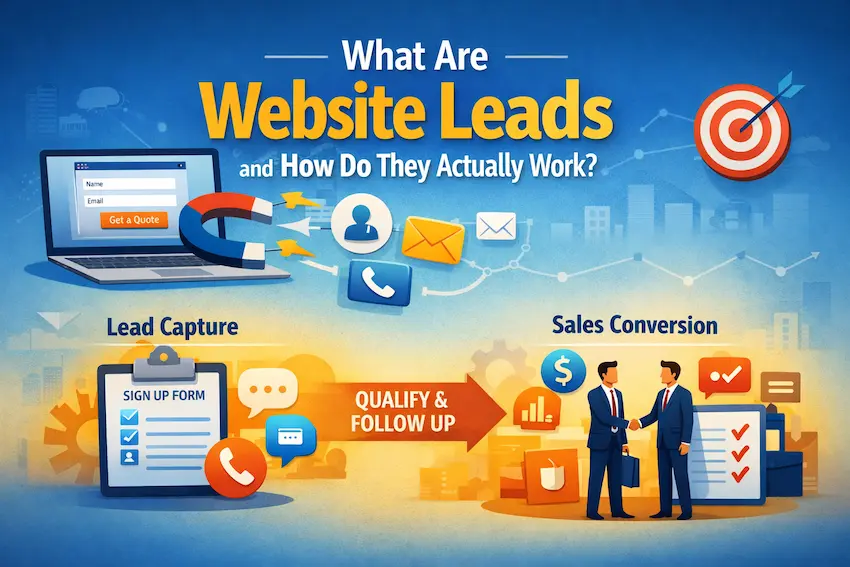
Once a lead is captured, it enters a strategic workflow connecting marketing and sales. Speed becomes a game-changing factor here. A fast response often determines whether a visitor becomes a customer or disappears entirely. Many businesses automate initial communication through CRM alerts or instant email responses while reserving personalized interaction for qualification and closing.
Qualification separates casual inquiries from serious buyers. This process may involve evaluating user responses, confirming budgets, identifying business needs, or conducting a quick introductory call. Effective qualification protects valuable time and ensures conversations remain relevant and persuasive.
Over time, businesses analyze lead performance to improve results. Metrics such as conversion rates, cost per lead, and close ratios reveal which channels attract serious buyers instead of passive browsers. This powerful feedback loop helps transform websites into reliable customer acquisition systems rather than static online brochures.
The Powerful Role of SEO and Content in Lead Generation
Search engine optimization plays a critical role in generating consistent, high-quality website leads. Businesses ranking for high-intent keywords attract visitors already searching for solutions, making them significantly more likely to convert.
Content marketing strengthens this process by educating and building trust before a sales conversation even begins. Blog posts, case studies, landing pages, service content, and FAQs help position a business as an authority while improving search visibility.
Valuable content also increases engagement, improves user experience, and encourages visitors to take action. When combined strategically, SEO and content marketing create a powerful lead generation engine capable of delivering long-term business growth.
Costly Mistakes That Secretly Destroy Website Leads
Many businesses lose valuable leads not because of low traffic, but because of avoidable website mistakes.
Complicated Forms
Long or confusing forms create friction and reduce conversions. Simpler forms often generate dramatically better results.
Slow Website Speed
Modern users expect instant experiences. Slow-loading pages increase bounce rates and silently destroy lead opportunities.
Weak Call-to-Actions
Without persuasive and action-driven CTAs, visitors often leave without taking the next step.
Poor Mobile Experience
With mobile traffic dominating digital behavior, an unoptimized mobile website can severely impact lead generation and customer trust.
Why Website Leads Matter Beyond Marketing
Website leads influence far more than marketing performance. They directly impact revenue forecasting, hiring decisions, operational planning, and long-term business strategy. A steady flow of qualified leads signals strong alignment between market demand and brand positioning.
On the other hand, inconsistent lead generation often exposes deeper problems in messaging, user experience, or targeting. Businesses that understand and optimize this process gain a powerful competitive advantage in increasingly crowded digital markets.
Handled strategically, website leads become a predictable source of scalable growth. Ignored or poorly managed, they turn into missed opportunities that quietly reduce trust, momentum, and profitability.
Building a Powerful and Sustainable Lead Generation System
Successful companies do not depend on random inquiries or short-term traffic spikes. They build scalable systems designed to consistently attract, capture, and convert high-intent prospects.
This involves:
- Advanced SEO optimization
- High-converting landing pages
- Persuasive content marketing
- Fast-loading websites
- Strategic email follow-ups
- Data-driven conversion testing
Lead generation is not a one-time tactic. It is an ongoing growth strategy that evolves with customer behavior and market trends. Businesses that continuously refine their digital presence position themselves for long-term authority, stronger customer relationships, and unstoppable online growth.